Mini Ball Valve MM High Precision and 1 ball valve price
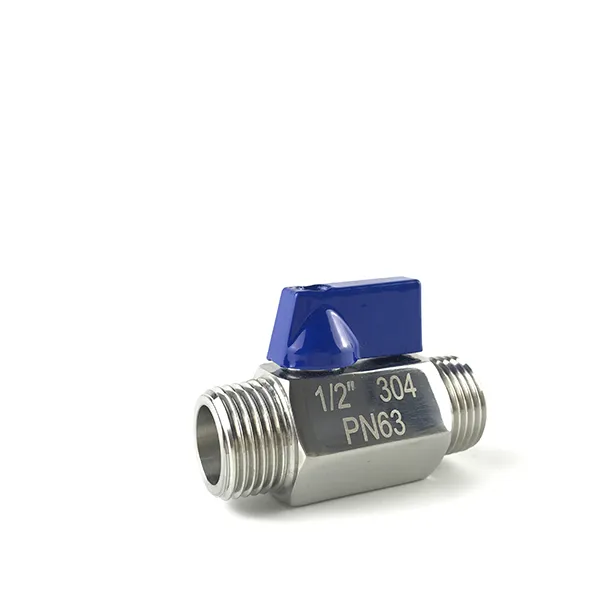
When integrating fluid control into confined industrial spaces, the balance between spatial efficiency and leak-proof reliability is paramount. The Mini Ball Valve M/M is engineered specifically for these high-precision requirements, offering a compact, lightweight design that streamlines flow management in low-flow systems. By utilizing high-grade stainless steel 304 or 316, these valves ensure long-term durability and resistance to corrosion, making them indispensable for instruments, laboratory equipment, and compact hydraulic lines.
For procurement managers and engineers, understanding the total cost of ownership involves more than just the initial 1 ball valve price; it requires an analysis of material compatibility and seal longevity. With premium Teflon seats and a robust external threaded design, this valve minimizes operating torque while maintaining tight closure across a wide temperature spectrum. This technical synergy allows for seamless integration into meters and small-scale networks where reliability is critical and maintenance windows are narrow.

Engineering Precision through Advanced Stainless Steel Construction and Material Science
The structural integrity of the Mini Ball Valve M/M is rooted in the selection of high-performance alloys. By offering both Stainless Steel 304 and 316, the valve caters to varying levels of corrosive exposure. SS316, in particular, provides superior resistance to chlorides and marine environments, ensuring that the valve body does not degrade under chemical stress. This material foundation is critical for applications in the petroleum and chemical industries where purity and structural stability are non-negotiable.
Beyond the metal shell, the internal sealing mechanism utilizes high-grade Teflon (PTFE). This choice is strategic; Teflon is renowned for its chemical inertness and low friction coefficient. The result is a valve that requires minimal effort to actuate while providing a bubble-tight seal. The operating temperature range from -20°C to 150°C ensures that the valve remains functional in both cryogenic-adjacent and high-heat steam environments without seal deformation.
Furthermore, the external/external thread design (available in NPT, BSP, or metric) allows for direct installation. This eliminates the need for additional adapters, which are often the primary points of failure and leakage in complex piping networks. By reducing the number of joints, the overall system reliability is significantly enhanced, particularly in high-vibration environments found in industrial machinery.

Versatile Application Scenarios from Medical Laboratories to Heavy Industrial Circuits
The Mini Ball Valve M/M is designed for versatility, solving the common challenge of "over-sizing" in small-scale fluid networks. In Laboratory and Analytical Systems, these valves provide precise control over reagent flow, where contamination must be zero and precision is absolute. The smooth internal bore and stainless steel construction prevent fluid stagnation and facilitate easy cleaning, meeting the stringent requirements of sanitary fluid handling.
In the realm of Industrial Machinery, these valves are frequently deployed in pneumatic systems and compact hydraulic lines. Their ability to handle air, oil, and gas makes them a multi-purpose tool for cooling circuits. Because they are lightweight, they place minimal stress on the supporting pipework, which is essential when valves are mounted on moving parts or sensitive instrumentation.
HVAC and plumbing sectors also benefit from the compact footprint of these valves. Whether installed in small heating/cooling systems or water filtration units, the Mini Ball Valve M/M provides a reliable shut-off mechanism that saves valuable real estate within equipment cabinets. Its compliance with ISO 9001, CE, and RoHS standards ensures that it meets global safety and environmental regulations, facilitating easy export and installation across international borders.
Critical Selection Criteria for High-Performance Compact Flow Control Solutions
Selecting the right compact valve requires a deep dive into the operational medium and environmental constraints. Engineers must first evaluate the fluid chemistry; while SS304 is sufficient for water and mild chemicals, SS316 is mandatory for aggressive acids or salt-heavy environments. Failure to match the material to the medium can lead to pitting corrosion, which compromises the seal and leads to premature system failure.
Another vital consideration is the thread standard. Mismatching NPT (tapered) with BSP (parallel) threads can cause catastrophic leaks under pressure. It is essential to verify the existing equipment's threading before procurement to ensure a leak-free interface. Additionally, the pressure rating must be cross-referenced with the system's peak surge pressure to avoid valve body rupture or seat blow-out.
Finally, maintenance accessibility should guide the choice. The Mini Ball Valve M/M is designed for quick maintenance, allowing users to remove and clean seals without dismantling the entire line. For buyers evaluating the 1 ball valve price, it is important to consider the reduced downtime associated with such a maintainable design, which often outweighs a marginally lower initial cost of a non-serviceable alternative.
Technical Specifications and Material Suitability Matrix
| Material Grade | Seal Material | Temp Range | Recommended Media |
|---|---|---|---|
| Stainless Steel 304 | Premium Teflon | -20°C to 150°C | Water, Air, Mild Chemicals |
| Stainless Steel 316 | Premium Teflon | -20°C to 150°C | Corrosive Fluids, Marine, Acids |
| WCB (Carbon Steel) | Teflon / RPTFE | -29°C to 200°C | Oil, Gas, Steam |
| Custom Alloy | Application-Specific | Varies by Model | Specialty Process Chemicals |
| SS 316L | Premium Teflon | -20°C to 150°C | High-Purity Pharma/Food |
Manufacturing Excellence and Quality Assurance in Precision Casting
The quality of a ball valve is determined by the precision of its internal bore and the smoothness of its finish. Cangzhou Houde utilizes the advanced silicon sol lost wax precision casting process, which allows for the creation of complex cavities and accurate positioning that traditional casting cannot achieve. This process ensures that the valve body is structurally dense and free of internal voids, which is critical for maintaining pressure integrity.
To ensure every unit meets international standards such as ASTM, ANSI, and DIN, the company employs a rigorous testing regime. Each production batch is subjected to analysis via Swiss ARL spectrograph and metallurgical microscopes to verify material composition. Hardness testers and universal testing machines are used to ensure the stainless steel meets the required mechanical properties to withstand operational stress without warping.
The integration of high-precision CNC machines and machining centers further guarantees that the threaded connections are perfectly concentric. This precision minimizes the torque required for installation and ensures a tighter seal between the valve and the piping. By controlling the entire production line—from mold design to surface treatment—Houde maintains a level of consistency that is essential for large-scale industrial deployments.
Procurement Strategies and Future Trends in Miniaturized Valve Technology
As industrial systems move toward further miniaturization and modularity, the demand for high-performance mini valves is increasing. Future procurement trends suggest a shift toward "smart" integration, where compact valves are paired with sensors for real-time flow monitoring. Buyers should look for suppliers who can not only provide the hardware but also offer technical R&D support for special process demands, such as deep cavity requirements or custom alloy specifications.
When sourcing from a manufacturer, it is advisable to evaluate their after-sales ecosystem. A supplier that provides free technical training and a clear warranty policy—such as Houde's twelve-month warranty—reduces the long-term risk for the buyer. Furthermore, sourcing from a company with a production capacity of 1200 tons per year ensures that lead times remain stable even during large-scale project rollouts.
Ultimately, the goal of modern procurement is to maximize the "Value-to-Cost" ratio. By choosing a valve that is compliant with REACH and RoHS, companies avoid future regulatory hurdles and ensure their equipment is sustainable. The transition toward higher-grade materials like SS316L for medical and food applications reflects a broader industry trend toward extreme purity and longevity in fluid handling.
Frequently Asked Questions Regarding Mini Ball Valve Selection
What is the primary difference between SS304 and SS316 for mini ball valves?
SS304 is ideal for general-purpose applications involving water, air, and mild chemicals. SS316 contains molybdenum, which provides significantly higher resistance to corrosion, especially against chlorides and sulfuric acids, making it the standard for marine and chemical processing environments.
Can these valves be used for high-temperature steam applications?
Yes, the premium Teflon seats are rated for temperatures up to 150°C (302°F). For steam applications within this range, the Mini Ball Valve M/M provides a reliable seal and low operating torque, though for temperatures exceeding 150°C, alternative seat materials may be required.
How do I ensure the threads are compatible with my existing piping?
You must identify if your system uses NPT (American National Standard Pipe Thread), BSP (British Standard Pipe), or Metric threads. These are not interchangeable. We recommend checking the technical drawings of your equipment or using a thread gauge before specifying the valve thread type.
Is the Mini Ball Valve M/M suitable for medical or food-grade fluids?
Yes, when specified in Stainless Steel 316 or 316L, these valves are highly suitable for sanitary fluid handling. The smooth internal surfaces and corrosion-resistant alloys prevent contamination and allow for rigorous sterilization processes required in medical and food equipment.
What should I check to verify the quality of a stainless steel valve supplier?
Look for manufacturers who utilize precision casting (like silicon sol lost wax) and possess advanced testing equipment such as ARL spectrographs and metallurgical microscopes. Certifications like ISO 9001, CE, and RoHS are also key indicators of a standardized quality management system.
What is the typical maintenance requirement for these valves?
Because of the robust Teflon seals and stainless steel body, maintenance is minimal. However, in high-cycle applications, it is recommended to periodically inspect the seal for wear and clean the valve internals to remove any accumulated debris that could hinder the ball's rotation.
Technical Industry References
- ASTM International - Standards for Material Specifications
- ISO - International Organization for Standardization
- ANSI - American National Standards Institute
- DIN - German Institute for Standardization
For detailed technical consultations or to request a customized quote based on your specific fluid medium and pressure requirements, please contact our engineering team today. High-quality stainless steel is the foundation of a reliable system.
Related Industrial Valve Solutions