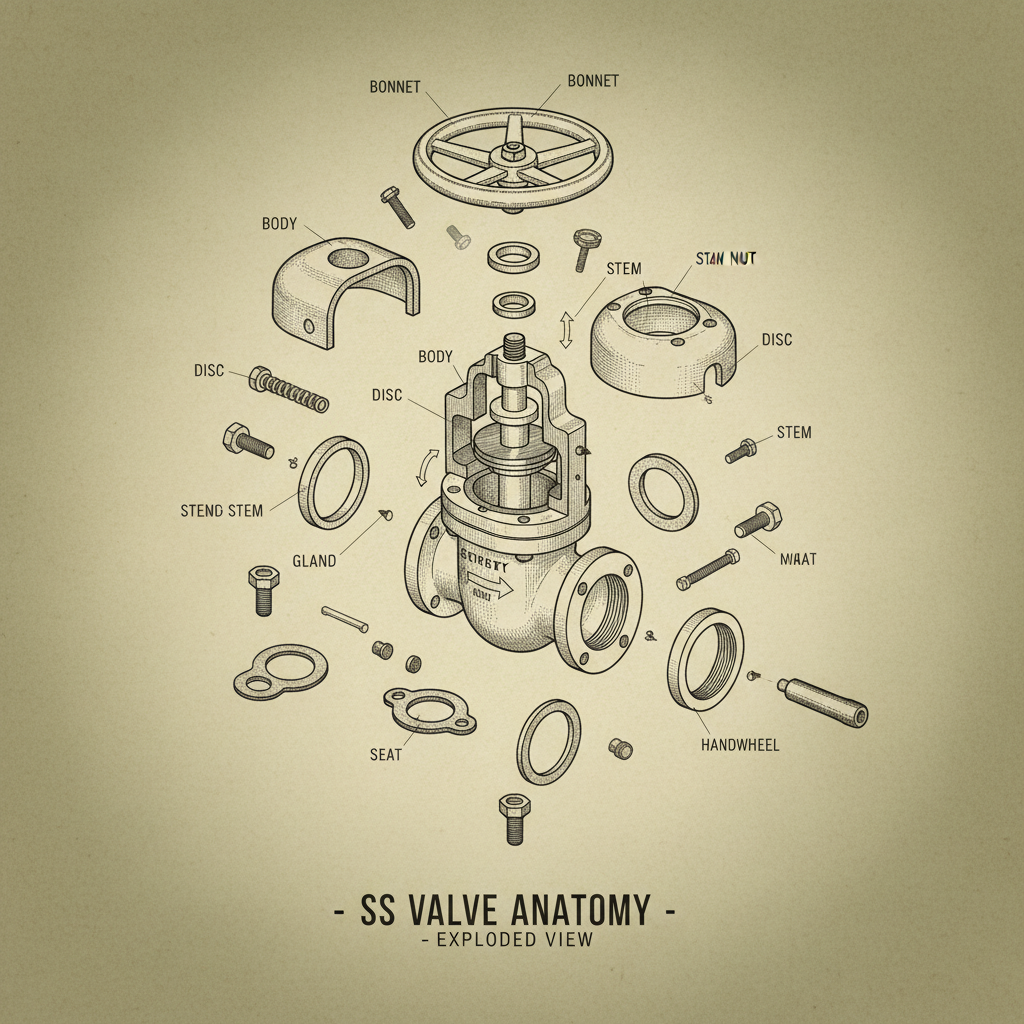

Finding a competent ball valves factory requires more than just comparing price lists; it necessitates a deep dive into the manufacturer's technical infrastructure and material traceability. In B2B industrial procurement, the reliability of flow control components directly impacts the safety and operational efficiency of petroleum, chemical, and food processing plants. This guide examines the critical benchmarks for evaluating stainless steel valve production and how to identify a supplier capable of meeting rigorous international standards.
The complexity of modern fluid systems demands components that can withstand extreme pressures and corrosive media. Whether sourcing ball, globe, or check valves, the integration of advanced casting processes and high-precision machining is non-negotiable. For procurement officers and engineers, understanding the relationship between the casting method—such as silicon sol lost wax precision casting—and the final product's longevity is essential for reducing long-term maintenance costs and avoiding catastrophic system failures.
Throughout this analysis, we will outline the essential criteria for supplier evaluation, from spectroscopic material analysis to the capabilities of CNC machining centers. Readers will gain a practical framework for auditing a manufacturer's quality management system and ensuring that the supplied hardware complies with global specifications like ASTM, ANSI, and DIN, thereby securing a stable and high-performance supply chain for their industrial infrastructure.
Industrial Valve Manufacturing Standards
The production of high-performance industrial valves is governed by a strict intersection of metallurgy and mechanical engineering. At the core of a professional ball valves factory is the ability to maintain chemical consistency across different batches of stainless steel, such as 304, 316, and 316L. The use of precision casting is particularly critical here; the silicon sol lost wax process allows for the creation of complex internal geometries with minimal porosity, which is vital for preventing leaks in high-pressure environments. Furthermore, the transition from raw casting to a finished valve involves rigorous machining stages where CNC centers ensure that tolerances are kept within microns, ensuring a perfect seal between the ball and the seat.
Selecting a Reliable Valve Production Partner
Evaluating a manufacturer involves auditing their end-to-end production cycle. A top-tier supplier does not merely assemble parts but manages the entire lifecycle from mold design to final surface treatment. The following dimensions provide a structured approach to assessing whether a facility has the technical depth to support your specific project requirements.
Material Grade Certification
Verify that the manufacturer utilizes an ARL spectrograph to confirm the chemical composition of the stainless steel. This prevents the mixing of grades, which could lead to premature corrosion in chemical processing environments. Material traceability from the ingot to the finished valve is a hallmark of a professional operation.
| Material Grade | Key Property | Typical Application | Verification Method |
|---|---|---|---|
| SS304/304L | General Corrosion Resistance | Food & Beverage, Construction | Spectrograph Analysis |
| SS316/316L | High Chloride Resistance | Marine, Chemical Plants | Spectrograph Analysis |
| WCB | High Strength/Pressure | Petroleum, Oil & Gas | Mechanical Testing |
| Custom Alloys | Specific Environment Fit | Pharmaceutical, Specialized Acid | Chemical Composition Test |
| Bronze/Cast Iron | Cost-Effective Flow | Water Supply, HVAC | Hardness Testing |
| PVC/Polymer | Total Corrosion Immunity | Wastewater Treatment | Material Certification |
Precision Casting Capabilities
Advanced facilities employ silicon sol lost wax precision casting to achieve superior surface finishes and dimensional accuracy. This method reduces the need for extensive post-casting machining, which maintains the integrity of the metal structure and ensures that the valve body can withstand high cyclic loads without developing stress cracks.
Machining and CNC Accuracy
The precision of the valve seat and ball is what determines the leak rate. Look for manufacturers equipped with high-precision CNC machines and machining centers. These tools allow for the exact positioning of cavities and the creation of complex internal paths that are essential for specialized valve functions.
Testing and Quality Assurance
A comprehensive testing lab is a non-negotiable requirement. Essential equipment includes Metallurgical Microscopes for grain structure analysis, hardness testers, and Universal testing machines. Three-dimensional coordinate measuring machines (CMM) should be used to validate that the final product matches the original CAD design.
Customization for Complex Cavities
Many industrial projects require non-standard specifications, such as deep or complex cavities and accurate positioning for specialized actuators. A supplier with strong R&D capabilities can modify mold designs to meet these unique process demands without compromising the valve's structural pressure rating.
Industry Standard Compliance
Ensure the production line follows international standards. Whether it is GB, ASTM, ANSI, BS, DIN, or JIS, compliance ensures that the valves will be compatible with global piping systems and meet the safety regulations of the region where they are installed.
Supply Chain and Lead Time
Assess the manufacturer's annual capacity—for instance, a capacity of 1200 tons per year indicates a scale capable of handling large-scale industrial orders. Evaluate their ability to provide a complete production line from mold design to surface treatment to avoid delays caused by outsourcing sub-processes.
FAQ
How do I verify if a valve manufacturer is truly "professional"?
A professional manufacturer should be able to provide a full suite of testing reports, including spectrograph analysis for material purity, hardness tests, and dimensional inspection reports. They should possess in-house capabilities for mold design and CNC machining rather than relying entirely on third-party workshops. Additionally, check for adherence to global standards such as ASTM or DIN.
What is the benefit of silicon sol lost wax casting over sand casting?
Silicon sol lost wax precision casting produces parts with much tighter tolerances and a significantly smoother surface finish. This reduces the risk of casting defects like blowholes or inclusions and minimizes the amount of machining required, which preserves the material's metallurgical properties and increases the valve's overall lifespan in corrosive environments.
Which stainless steel grade is best for chemical processing?
While SS304 is suitable for general use, SS316 and 316L are generally preferred for chemical processing due to the addition of molybdenum, which enhances resistance to pitting and crevice corrosion, especially in environments containing chlorides or acidic media.
Can custom valve designs be produced for complex pipeline systems?
Yes, provided the manufacturer has strong R&D and mold design capabilities. They can engineer valves with deep cavities or specific positioning requirements to fit unconventional pipeline architectures, as long as the design is validated through engineering simulations and pressure tests.
What should I look for in a valve warranty and after-sales service?
A reliable supplier typically offers a minimum 12-month warranty covering quality-related defects. Beyond replacement, look for companies that provide technical training for your personnel and a transparent pricing model for accessories and repairs outside the warranty period, ensuring the equipment's long-term operational viability.
How does the choice of valve impact energy efficiency in a system?
Precision-engineered valves minimize pressure drop across the system. By ensuring a streamlined flow and preventing backflow (in the case of check valves), they reduce the workload on pumps and compressors, leading to lower energy consumption and reduced operational costs over the system's lifecycle.
References and further reading
- International Standard for Stainless Steel Valves: ASTM A351 / A182
- Guide to Precision Casting Processes: Silicon Sol Lost Wax Methodology
- Industrial Flow Control Fundamentals: Pressure Drop and Fluid Dynamics
Related Articles