In the complex world of industrial fluid control, the 1pc ball valve stands as a pinnacle of streamlined engineering. By utilizing a single-piece body design, these components minimize potential leak paths and reduce overall assembly weight, making them indispensable for modern piping systems where space and reliability are paramount. Understanding the nuances of this specific valve architecture is key for engineers looking to optimize flow efficiency while maintaining strict safety standards.
Globally, the demand for high-performance flow control solutions has surged as industrial automation expands across Asia, Europe, and North America. The adoption of the 1pc ball valve reflects a broader industry shift toward "lean" hardware—reducing the number of parts to decrease the probability of mechanical failure. This transition is not merely about cost-cutting but about enhancing the structural integrity of the entire valve assembly.
Whether deployed in a high-pressure chemical plant or a municipal water treatment facility, the choice of a 1pc ball valve offers a strategic balance between operational simplicity and long-term durability. By eliminating the gaskets and bolts found in multi-piece designs, these valves provide a tighter seal and a more compact footprint, directly addressing the industry's challenge of mitigating fugitive emissions and operational downtime.
Global Relevance of the 1pc Ball Valve
The global industrial landscape is currently undergoing a massive transition toward higher efficiency and lower maintenance overhead. Within this context, the 1pc ball valve has emerged as a critical component for streamlining fluid transport. According to ISO standards and global manufacturing trends, the reduction of joints in pressure-containing equipment significantly lowers the risk of catastrophic failure, which is a primary concern in high-stakes environments like petrochemical refineries.
As emerging economies in Southeast Asia and Africa build out their primary industrial infrastructure, the demand for reliable, easy-to-install hardware has peaked. The one-piece design simplifies the supply chain and installation process, allowing for rapid deployment in remote industrial zones where specialized maintenance crews may be scarce. This global relevance is underscored by the valve's ability to provide a bubble-tight shut-off with minimal manual intervention.
Defining the 1pc Ball Valve Architecture
At its most basic level, a 1pc ball valve is a quarter-turn rotational motion valve that utilizes a spherical disc (the ball) to control the flow of a liquid or gas. Unlike two-piece or three-piece variants, the "1pc" designation refers to a body that is cast or forged as a single continuous unit. This architectural choice eliminates the need for body bolts and gaskets between the body sections, which are common points of failure in traditional valve designs.
Connecting this design to modern humanitarian and industrial needs, the simplicity of the one-piece construction ensures that the valve can be manufactured with extreme precision. In critical water distribution projects in developing regions, the 1pc ball valve provides a cost-effective yet durable solution that prevents leakage of precious resources, ensuring that clean water reaches its destination without waste.
From a technical standpoint, the integrity of the seal is maintained through high-performance PTFE or RPTFE seats that wrap around the ball. Because the body is a single piece, the internal stresses are distributed more evenly across the shell, allowing the valve to handle specific pressure ratings more consistently than multi-piece alternatives. This makes it a preferred choice for applications where a compact, "set-and-forget" solution is required.
Core Components and Engineering Factors
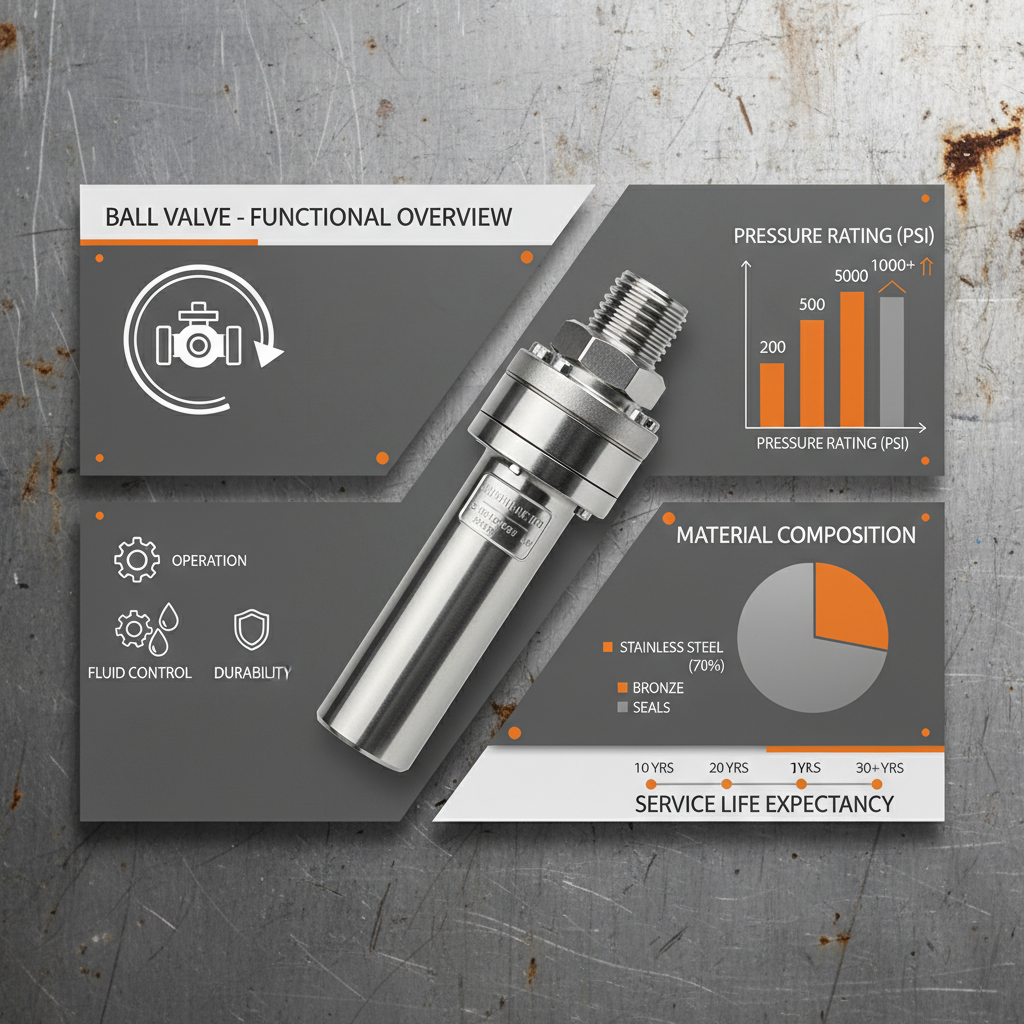
The durability of a 1pc ball valve is primarily determined by its material composition. High-grade stainless steel (such as CF8 or CF8M) is typically used to ensure corrosion resistance in aggressive environments. The seamless nature of the body prevents the "crevice corrosion" that often occurs at the joints of multi-piece valves, ensuring a lifespan that can span decades with minimal maintenance.
Scalability and cost-efficiency are also central to the 1pc ball valve 's appeal. By reducing the number of machining steps and eliminating the need for body fasteners, manufacturers can produce these valves at a lower unit cost without sacrificing the quality of the flow control. This scalability allows large-scale plants to implement thousands of isolation points across their network while keeping the capital expenditure manageable.
Finally, the precision of the stem-seal interface is what defines the valve's reliability. A high-quality 1pc ball valve employs advanced packing materials to prevent stem leakage, ensuring that the internal media remains contained even under fluctuating temperature cycles. This combination of a monolithic body and precision seating creates a robust barrier against environmental contamination.
Industrial Applications and Global Use Cases
The real-world application of the 1pc ball valve spans across diverse sectors, from the energy industry to food and beverage processing. In oil and gas midstream operations, these valves are often used for instrument isolation, where a small, leak-proof valve is necessary to isolate sensors from the main pipeline. Their compact design allows them to be integrated into tight manifolds without compromising the structural integrity of the system.
In remote industrial zones, such as mining operations in the Australian Outback or oil fields in Western Canada, the 1pc ball valve is prized for its resilience. In these environments, extreme temperature swings can cause gaskets in multi-piece valves to contract or expand, leading to leaks. The one-piece body eliminates this variable entirely, providing a stable and dependable seal regardless of the external weather conditions.
Performance Metrics of Different 1pc Ball Valve Configurations
Tangible Advantages and Long-Term Value
The most immediate advantage of implementing a 1pc ball valve is the dramatic reduction in maintenance costs. Because there are no body joints to monitor or re-torque over time, the labor hours required for routine inspections are significantly lowered. This operational efficiency translates into higher plant uptime and a lower Total Cost of Ownership (TCO) over the lifecycle of the installation.
Beyond the logical financial gains, there is a powerful emotional component: safety and trust. In hazardous environments where a single leak can lead to an environmental disaster or a workplace accident, the inherent security of a one-piece body provides peace of mind for operators. The reliability of the 1pc ball valve ensures that safety protocols are upheld, protecting both the workforce and the surrounding community through engineering excellence.
Future Innovations in Valve Technology
As we move toward Industry 4.0, the 1pc ball valve is evolving to integrate with smart monitoring systems. Future iterations are seeing the addition of IoT sensors that can detect minute changes in stem torque or internal pressure, allowing for predictive maintenance. This digital transformation means that a valve is no longer just a piece of "dumb" iron, but a data-generating node in a smart factory.
Material science is also playing a pivotal role in the evolution of these components. The introduction of additive manufacturing (3D printing) for metal components allows for the creation of 1pc ball valve bodies with optimized internal flow paths that reduce turbulence and pressure drop. This innovation not only improves efficiency but also reduces the carbon footprint of the manufacturing process by minimizing material waste.
Sustainability is now a core driver of design. New coatings are being developed to extend the life of the ball and seat, reducing the frequency of replacement and the amount of metal scrap entering the waste stream. The synergy between green energy goals and high-efficiency flow control is positioning the modern 1pc ball valve as a key player in the transition to hydrogen and other clean-fuel infrastructures.
Overcoming Operational Challenges
Despite their benefits, the primary challenge with the 1pc ball valve is the lack of serviceability compared to three-piece designs. Since the body is a single unit, the valve cannot be "swung open" for internal cleaning or seat replacement without removing the entire unit from the line. For most users, this is a fair trade-off for the increased leak resistance, but it requires careful planning during the initial piping design.
To overcome this, expert engineers recommend the installation of strategic bypass loops or double-block-and-bleed configurations. By pairing the 1pc ball valve with complementary piping arrangements, operators can isolate the valve for replacement without shutting down the entire process stream, thereby maintaining the advantages of the one-piece design while mitigating its service limitations.
Another common hurdle is the selection of the correct seat material for aggressive chemicals. To solve this, a rigorous material compatibility analysis is essential. By utilizing high-performance fluoropolymers or metal-to-metal seating, the 1pc ball valve can be tailored to handle the most corrosive media, ensuring that the "single-piece" advantage isn't compromised by internal chemical erosion.
Comparison of 1pc Ball Valve Material Performance by Application
| Material Type |
Corrosion Resistance |
Pressure Rating |
Maintenance Need |
| Stainless Steel 304 |
Moderate |
High |
Low |
| Stainless Steel 316 |
High |
High |
Very Low |
| Carbon Steel |
Low |
Very High |
Moderate |
| Alloy 20 |
Extreme |
Moderate |
Low |
| Monel |
Extreme |
High |
Very Low |
| PVC/CPVC |
High (Chemical) |
Low |
Low |
FAQS
The primary advantage is the reduction of leak paths. By having a single-piece body, you eliminate the gaskets and bolts used to join body sections. This monolithic structure inherently reduces the risk of external leakage and simplifies the installation process, making it more reliable in high-pressure or hazardous environments where joint integrity is critical.
Generally, no. Because the body is a single piece, you cannot open it to replace the seats or the ball without disconnecting the valve from the piping. This is why we recommend designing your system with bypass valves or isolation manifolds, allowing for the complete removal and replacement of the unit without a full system shutdown.
For most corrosive applications, Stainless Steel 316 (CF8M) is the industry standard due to its molybdenum content. For extreme acids or saltwater, materials like Monel or Alloy 20 are preferred. For non-metallic requirements, CPVC is an excellent choice for chemical transport, provided the pressure and temperature remain within the material's limits.
A one-piece body often provides more consistent pressure distribution across the shell compared to multi-piece bodies. Since there are no joints to create stress concentrations, these valves can maintain high pressure ratings with a smaller overall footprint, though the specific rating always depends on the wall thickness and the material used.
Yes, in terms of both initial purchase and long-term maintenance. The manufacturing process for a single-piece body is often more streamlined, and the lack of fasteners and gaskets reduces the bill of materials. Furthermore, the reduction in leak-related maintenance significantly lowers the lifetime operational cost.
Depending on the media and operating conditions, a high-quality stainless steel 1pc ball valve can last 15 to 25 years. The lifespan is primarily determined by the wear on the seats and the stem packing. Regular lubrication of the stem and ensuring the valve is not operated beyond its pressure rating will maximize its service life.
Conclusion
The 1pc ball valve represents a sophisticated marriage of simplicity and strength. By eliminating unnecessary joints and focusing on a monolithic body design, it effectively solves the industry's most pressing concerns: leak prevention, maintenance reduction, and operational safety. From its global application in remote industrial zones to its integration into smart factories, the one-piece architecture provides a reliable, cost-effective, and durable solution for modern fluid control.
Looking forward, the continued integration of advanced materials and IoT connectivity will only enhance the value proposition of the 1pc ball valve . For engineers and procurement managers, investing in high-quality one-piece designs is not just a technical choice, but a strategic decision to ensure long-term system stability and sustainability. We encourage you to evaluate your current piping infrastructure to identify where the transition to one-piece architecture can drive the most efficiency. Visit our website for more technical specifications: www.houdevalve.com